Intro
In Yellowknife, Iqaluit, the Northwest Territories and Nunavut, gaming is a part of daily life for kids and adults alike. From Roblox and Minecraft to Call of Duty, everyone wants faster, cooler, and “free” upgrades. But what starts as a harmless search for a better game experience can quickly become a full‑blown cybersecurity nightmare for your family and your business.
At CasCom, we help organizations protect their digital identities and critical systems. One of the most overlooked risks? Infostealer malware hidden inside “free” game downloads and mods that quietly harvest credentials and expose entire companies.
When “Free Mods” Aren’t Free
Most kids don’t have their own credit cards, so they look for ways to get games or game enhancements without paying. A quick search like “free Roblox FPS booster” might lead them to:
- YouTube videos
- Discord groups
- Untrusted downloads
- Random executables
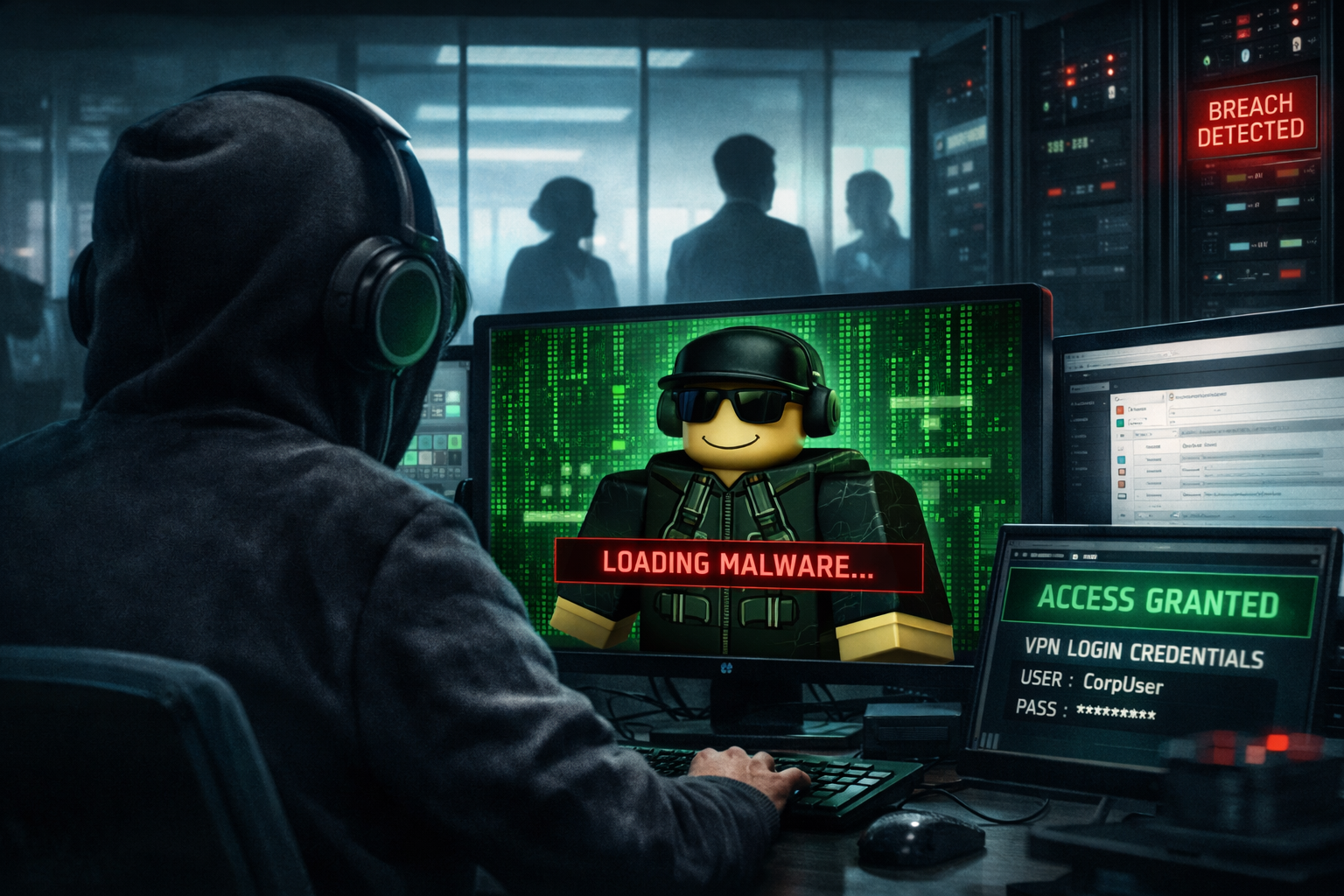
They click, install, and the game seems fine—no obvious problem. But lurking beneath the surface is malware designed to steal credentials, tokens and session data from browsers and applications.
This scenario isn’t hypothetical. Across Canada, infostealer malware disguised as game mods has become a leading way attackers infiltrate homes and, through connected devices, workplaces.
Why Gamers (Especially Kids) Are High‑Risk
From our work with organizations in the North, we see a clear pattern:
- Kids download files from unverified sources
- Antivirus gets disabled to make the “mod” work
- Discord links and unofficial repositories are trusted without question
- Executables run without hesitation
Attackers rely on this behaviour. They don’t need software vulnerabilities—just someone to double‑click a file.
What Infostealers Actually Do
Once activated, an infostealer works fast. Within seconds, it can harvest:
- Saved browser passwords
- Email and messaging tokens
- VPN credentials
- Remote access and cloud logins
- Session cookies that bypass multi‑factor authentication
All of this becomes a “stealer log,” a digital snapshot of your identity that’s sold on underground markets. Your child’s laptop might be the entry point—but your corporate accounts are what attackers want.
When Home Habits Become Enterprise Breaches
Here’s the key insight for businesses in Yellowknife, Iqaluit, NWT and Nunavut: it doesn’t matter who clicked the file. What matters is what identities exist on that machine.
If a device—home or work—has access to:
- Work email
- Corporate VPN
- Messaging platforms like Slack
- Single Sign‑On (SSO) tools
then malware can capture those credentials and give attackers legitimate access.
This isn’t about sophisticated exploits. It’s about identity theft at scale.
Real Risks for Northern Businesses
In regulated industries like mining, finance, law and healthcare across the North, a single stolen credential can lead to:
- Unauthorized access to corporate systems
- Breach of sensitive data
- Regulatory fines
- Lost client trust
- Extended downtime
And it often starts because a family member downloaded a “free mod.”
What You Can Do Today
Educate
Talk to your team and their families about the dangers of downloading unverified files. Explain that “free” often comes at a hidden cost.
Restrict
Separate personal devices from work systems. Don’t allow home laptops that play games to access corporate resources.
Protect
Enforce endpoint security, identity monitoring and strict access policies. This protects both personal and business environments.
Final Word
Infostealers have changed the game. Attackers no longer need to hack software—they harvest identity. In Yellowknife, Iqaluit, Northwest Territories and Nunavut, organizations must treat identity as the primary attack surface. Protecting digital identity isn’t optional—it’s essential.
At CasCom, we help Northern businesses build resilient, identity‑centric defenses so that fun stays fun, and work stays secure. Game over for malware—but only if you’re prepared.