If you’ve started hearing the term “CPCSC” floating around government contracts, defense suppliers, or cybersecurity discussions, you’re not alone.
Most people’s first reaction is:
“Great. Another acronym.”
But CPCSC is actually something Northern Canadian businesses should pay close attention to — especially if you work with government agencies, critical infrastructure, mining operations, aviation, telecommunications, logistics, or defense-related supply chains.
Because this isn’t just about cybersecurity.
It’s about who gets invited to future contracts.
And in Canada’s North, that conversation is getting bigger fast.
So, What Does CPCSC Mean?
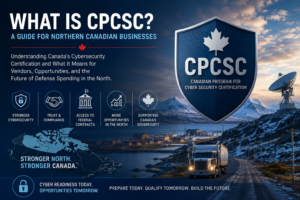
CPCSC stands for:
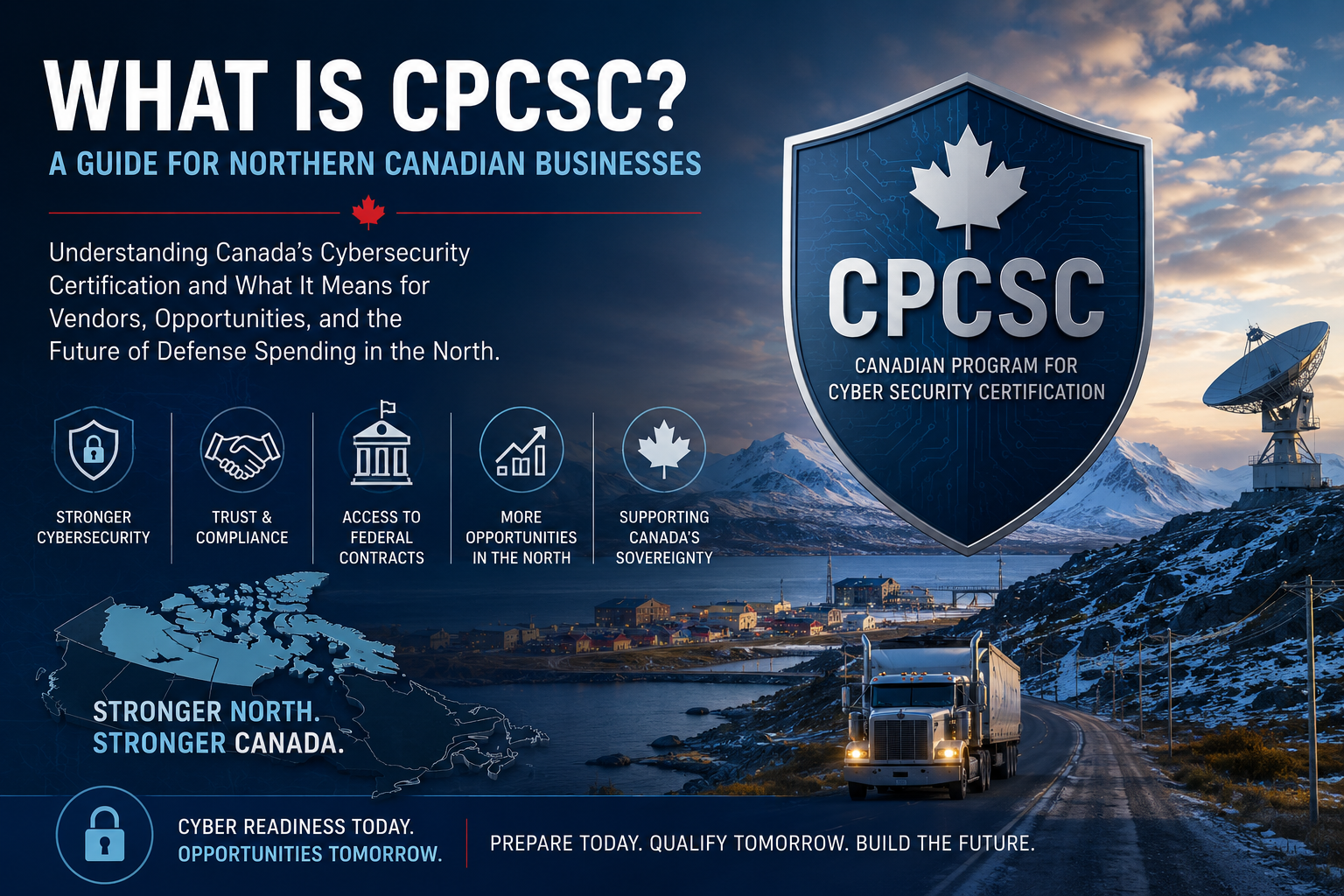
Canadian Program for Cyber Security Certification
It’s Canada’s new cybersecurity certification framework designed to protect sensitive government and defense information.
Think of it like a security clearance — but for your company’s technology practices.
The federal government wants to make sure businesses handling sensitive information can prove they’re protecting it properly. That includes things like:
- Client information
- Engineering drawings
- Procurement documents
- Infrastructure data
- Military-related information
- Supply chain communications
If your business wants to work on certain federal contracts in the future, CPCSC certification may become mandatory.
Not optional.
Not “nice to have.”
Required.
Why Is Canada Introducing CPCSC?
Short answer?
Because cyberattacks have become a national security problem.
Governments around the world have realized that attackers don’t always target the military directly anymore. Instead, they go after suppliers, contractors, IT providers, engineering firms, transportation companies, and smaller vendors connected to larger organizations.
Sometimes the weakest link isn’t the big organization.
It’s the subcontractor with weak passwords and outdated systems.
Canada’s response is CPCSC.
The goal is to create a baseline cybersecurity standard for companies participating in sensitive federal work.
Why This Matters in Northern Canada
The North is becoming strategically important in ways many businesses haven’t fully realized yet.
Federal attention toward Arctic sovereignty, northern infrastructure, mining, energy development, telecommunications, aviation, and defense presence continues to increase.
That means more spending.
More projects.
More contractors.
More scrutiny.
Northern businesses are increasingly part of supply chains connected to:
- Arctic infrastructure projects
- Satellite communications
- Air transportation
- Mining operations
- Remote energy systems
- Indigenous economic development
- Emergency communications
- Critical logistics corridors
And whenever federal dollars and strategic infrastructure are involved, cybersecurity requirements usually follow.
What Kind of Businesses Could Be Affected?
A lot more than people think.
You do not need to be a defense contractor in Ottawa to feel the impact of CPCSC.
Northern businesses that may eventually encounter these requirements include:
- Managed IT providers
- Engineering firms
- Construction companies
- Mining support vendors
- Aviation operators
- Telecommunications providers
- Logistics companies
- Security firms
- Professional services
- Equipment suppliers
- Environmental consultants
Even companies several layers down a supply chain could eventually be asked questions about cybersecurity practices.
That’s the important shift happening here.
Cybersecurity is no longer just an “IT department issue.”
It’s becoming a procurement requirement.
What Will Businesses Actually Need To Do?
The exact requirements depend on contract sensitivity levels, but generally, CPCSC pushes organizations toward stronger cybersecurity fundamentals, including:
- Multi-factor authentication
- Secure backups
- Employee cybersecurity training
- Access controls
- Incident response planning
- Device management
- Secure remote access
- Risk assessments
- Documented security policies
For many businesses, this sounds intimidating at first.
But in reality, a lot of companies already have pieces of this in place. The challenge is usually documentation, consistency, and proving controls exist.
That’s where many organizations struggle.
Not because they’re careless.
Because they’re busy running a business.
The Bigger Opportunity Most Businesses Miss
Here’s the part many people overlook:
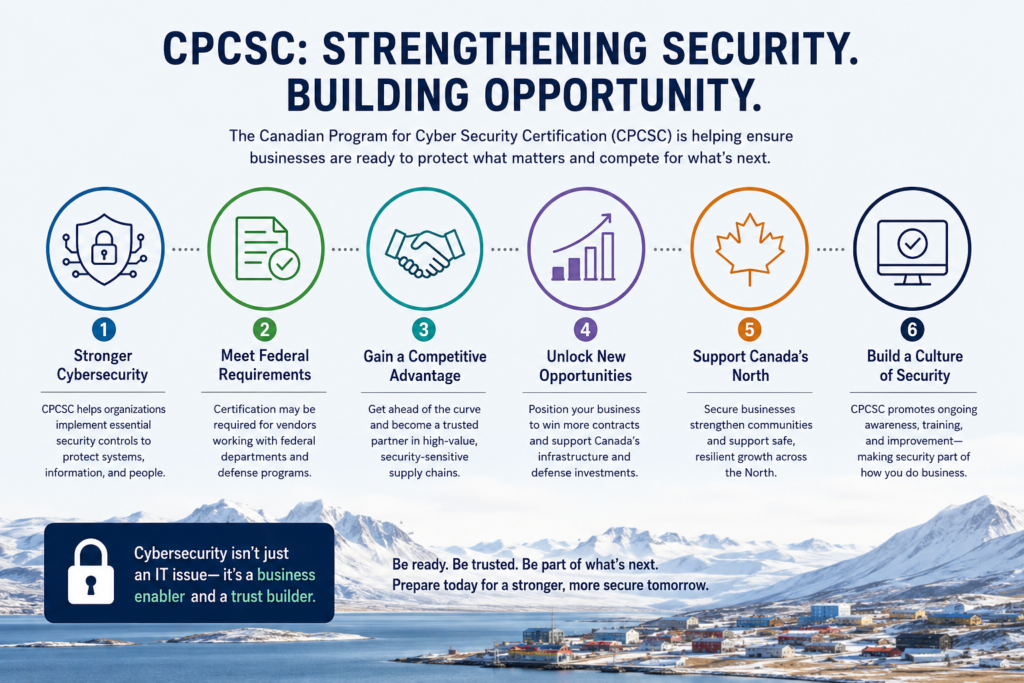
CPCSC is not just about compliance.
It’s about qualification.
Businesses that prepare early may position themselves ahead of competitors when federal and defense-related projects expand across Northern Canada.
That matters because major infrastructure and defense spending often creates a ripple effect:
Large prime contractors need local vendors.
Those vendors need subcontractors.
Those subcontractors need compliant technology partners.
The businesses ready first usually get the first calls.
The North’s Strategic Importance Is Growing
For years, Northern Canada was treated as geographically important but economically distant.
That mindset is changing.
The Arctic is becoming central to conversations around:
- National defense
- Telecommunications resilience
- Mineral security
- Transportation corridors
- Sovereignty enforcement
- Climate monitoring
- International shipping routes
As investment increases, cybersecurity expectations rise with it.
Governments don’t want vulnerable suppliers connected to critical northern infrastructure.
That means even smaller regional businesses may soon face security questionnaires, cyber insurance requirements, or certification expectations they’ve never encountered before.
What Happens If Businesses Ignore This?
Not every company needs to panic tomorrow.
But waiting until a contract requires compliance is usually the most expensive way to approach cybersecurity.
Organizations that delay often face:
- Rush implementation costs
- Failed security assessments
- Lost bid opportunities
- Insurance complications
- Vendor disqualification
- Operational disruptions after cyber incidents
The businesses that handle this best usually start early, gradually improving systems before deadlines appear.
The Good News
Most cybersecurity improvements are far less painful than people expect when approached properly.
Good cybersecurity isn’t about military-grade spy technology.
Usually, it’s about:
- Better processes
- Better visibility
- Better training
- Better planning
And increasingly, it’s becoming part of doing business professionally.
Especially in industries connected to government funding, infrastructure, and northern development.
Are You Ready for CPCSC Level 1?
If your business works with government agencies, critical infrastructure, mining, aviation, telecommunications, or northern supply chains, now is the time to understand where you stand.
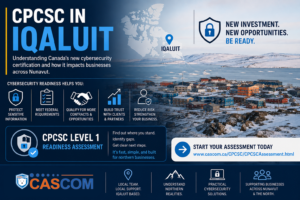
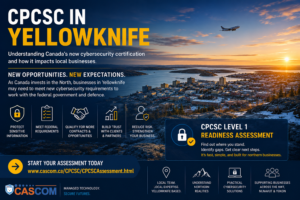
CasCom offers a CPCSC Level 1 Preparedness Review designed for organizations that want practical guidance without the technical jargon.
We’ll help you identify:
- Current cybersecurity gaps
- Likely compliance risks
- Required security controls
- Documentation weaknesses
- Practical next steps for readiness
Whether you’re preparing for future federal opportunities or simply want to reduce operational risk, getting ahead early is significantly easier than scrambling later.
Visit:
https://www.cascom.ca/CPCSC/Level1.html
to schedule your CPCSC Level 1 preparedness review.
Final Thought
CPCSC is part of a much bigger shift happening across Canada.
Cybersecurity is moving from “optional IT upgrade” to “business qualification requirement.”
For Northern Canadian businesses, that shift could create both pressure and opportunity.
The companies that understand it early may gain access to projects, partnerships, and procurement opportunities that others miss entirely.
And in a region where economic opportunities can reshape communities for decades, being prepared matters.